
Florence Price: Symphonies Nos. 1 & 3
Veröffentlichung:



The album celebrates Florence Price and two of her symphonies, as performed by The Philadelphia Orchestra and its Music and Artistic Director Yannick Nézet-Séguin. Its victory in the “Best Orchestral Performance” category at the 64th Grammy Awards in 2022 helped focus the spotlight of media attention on the life and work of this long-forgotten composer.
The process of investigating the history of this portrait of Price has resulted in some important historical insights. When compiling the material for the album, the DG editorial team used an image provided by the University of Arkansas Libraries. The composer’s papers have been housed within their Special Collections Department since 1974. Together with other documents added later, this archive is the most significant resource for anyone wanting to study her work. An online exhibition offers a fascinating glimpse into this extensive collection.
In the picture used on the DG cover Florence Price appears serious, dignified and yet approachable. She is sitting at a slight angle from the camera, her head a little tilted. The credit given in the booklet and, previously, on the University website, read simply “G. Nelidoff / University of Arkansas”. I wanted to find out more about Nelidoff for this Cover Story, but neither Wikipedia nor specialist history of photography websites yielded any information about a photographer of that name.
A first significant clue came early on, because the University of Arkansas Digital Collections provide a complete view of the picture, which was cropped for the cover. In one corner is a wonderfully stylised signature whose elegantly elongated letters hint at the glamour of a bygone age.
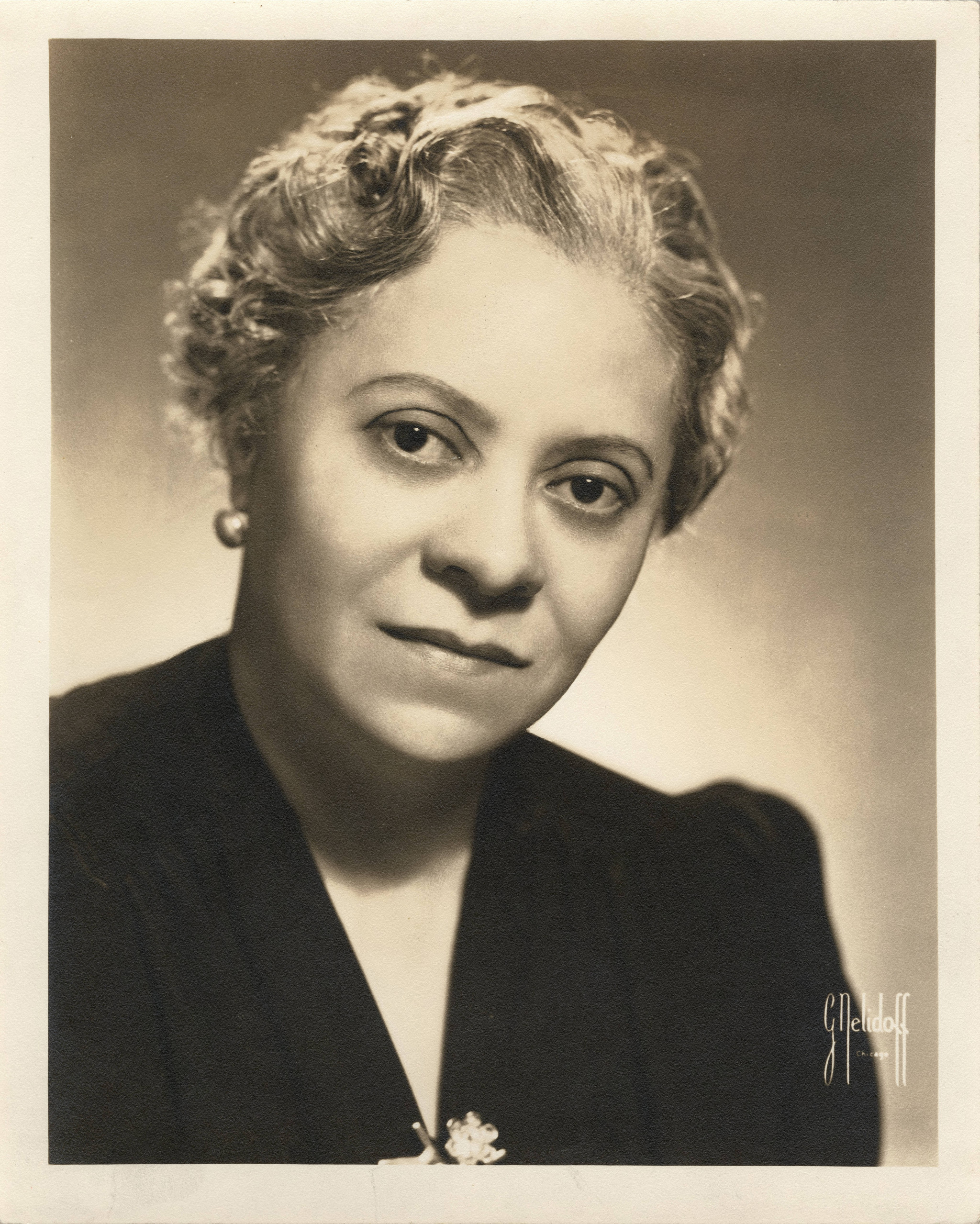
© George Nelidoff / University of Arkansas
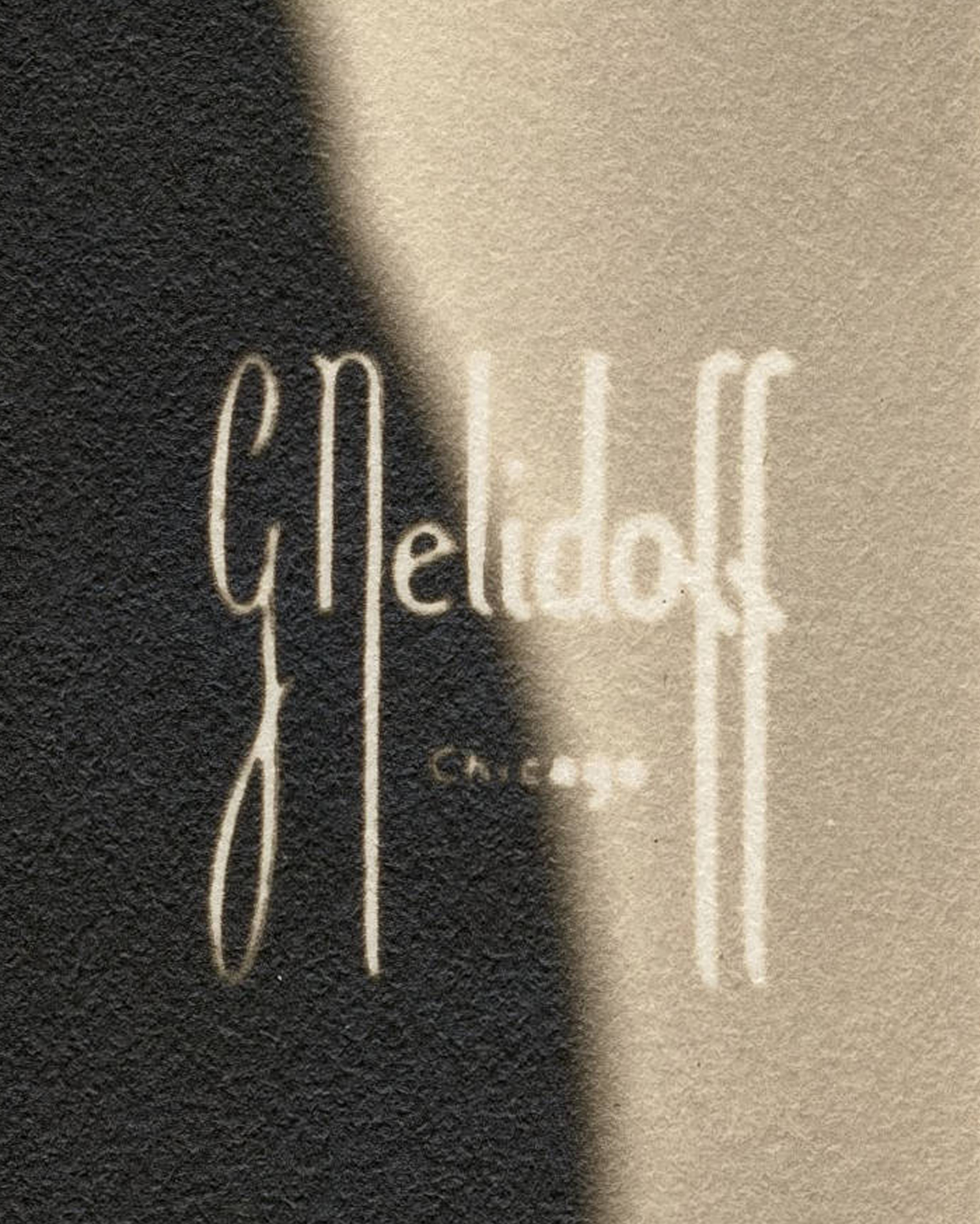
© George Nelidoff / University of Arkansas
Further searches unearthed a print on the website of a dealer in historical photographs which gave vital assistance in identifying the photographer. Stamped on the reverse were the words “George Nelidoff” and “If used for reproduction, please credit Nelidoff Studio, 721 N. Michigan Ave. Whitehall 5018 – Chicago”.
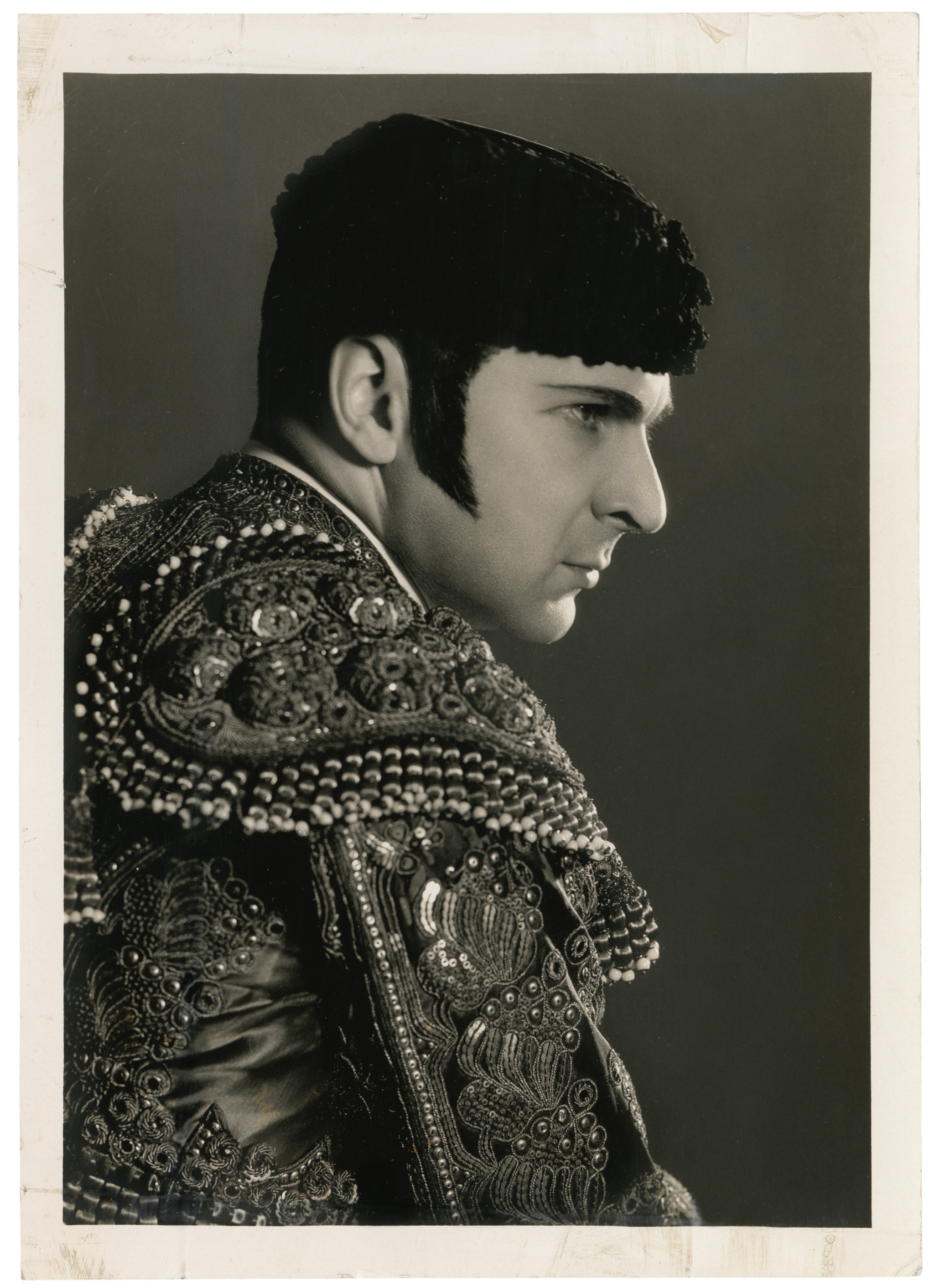
© George Nelidoff as Escamillo (front) - © George Nelidoff / Barbara Lauterbach Collection
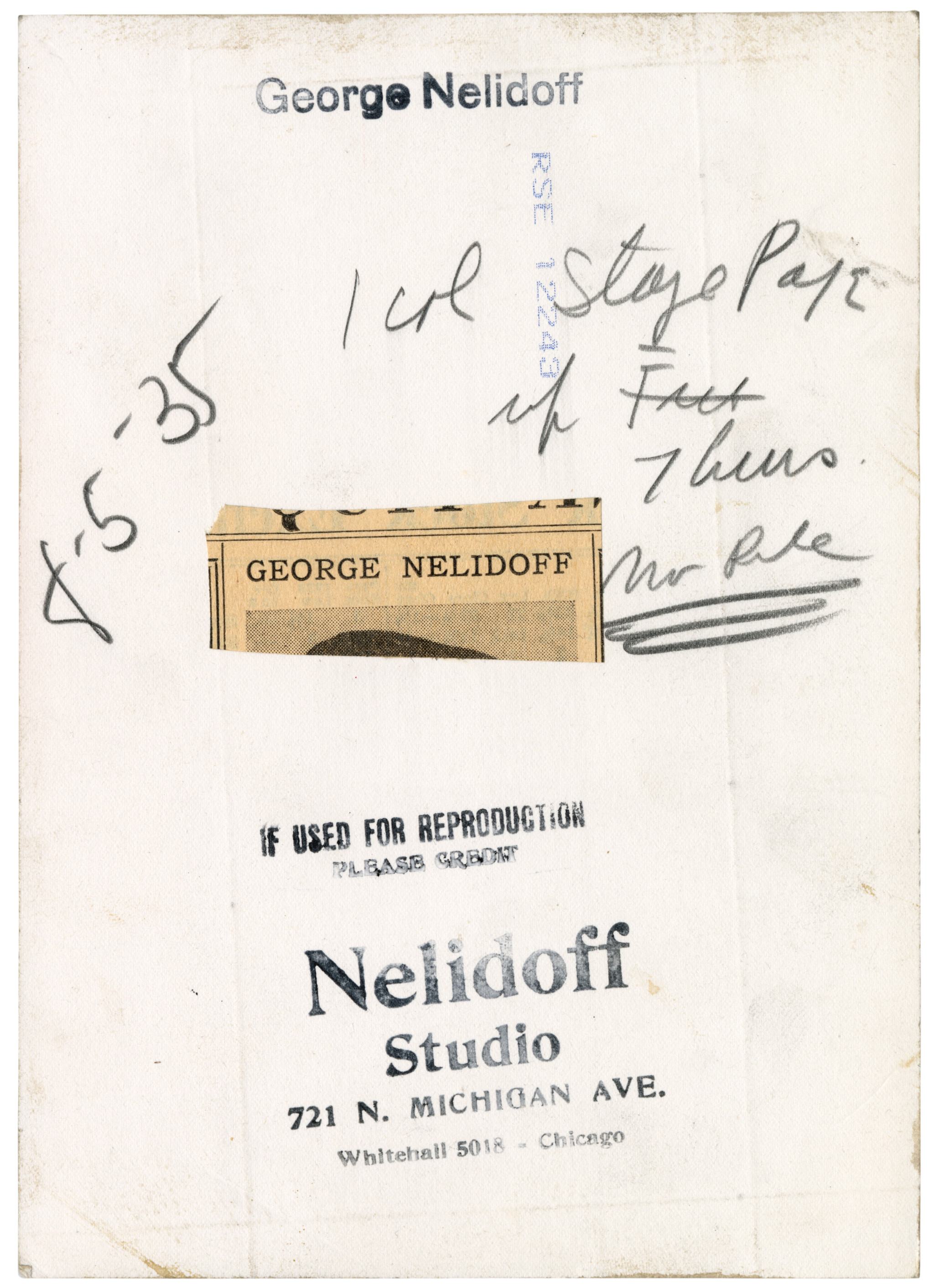
© George Nelidoff as Escamillo (reverse) - © George Nelidoff / Barbara Lauterbach Collection
So, a photographic studio had been identified, and I even had its exact address. But did the “G” in the signature stand for “George”? And if so, was George Nelidoff the owner of the studio? And who was the sitter in this portrait? My search continued, based on the assumption that the photographer’s name was George Nelidoff. The combination of the full name and “Chicago” as search terms brought up two quite different strands of result:
Firstly, some photos of members of the Chicago Symphony Orchestra, with the same stylised “G Nelidoff” signature on the front. These included a picture of conductor Frederick Stock, which can be seen as part of an extensive biographical article about the latter written by his great-granddaughter:
Born Friedrich Wilhelm August Stock in Germany in 1872, the conductor originally trained as a violinist and went on to serve as the CSO’s Music Director from 1905 until his death in 1942. And it was Stock who, on 15 June 1933, conducted the world premiere of Florence Price’s Symphony No. 1 in E minor in Chicago. That made Price the very first African American female composer to have had a work premiered by a major American orchestra! Given the times in which she lived, however, the success of this event failed to turn into a genuine breakthrough. Price understood the reasons well enough, as we can see from this matter-of-fact statement in a letter she wrote to Sergei Koussevitzky in 1943: “… I have two handicaps – those of sex and race. I am a woman; and I have some Negro blood in my veins.”
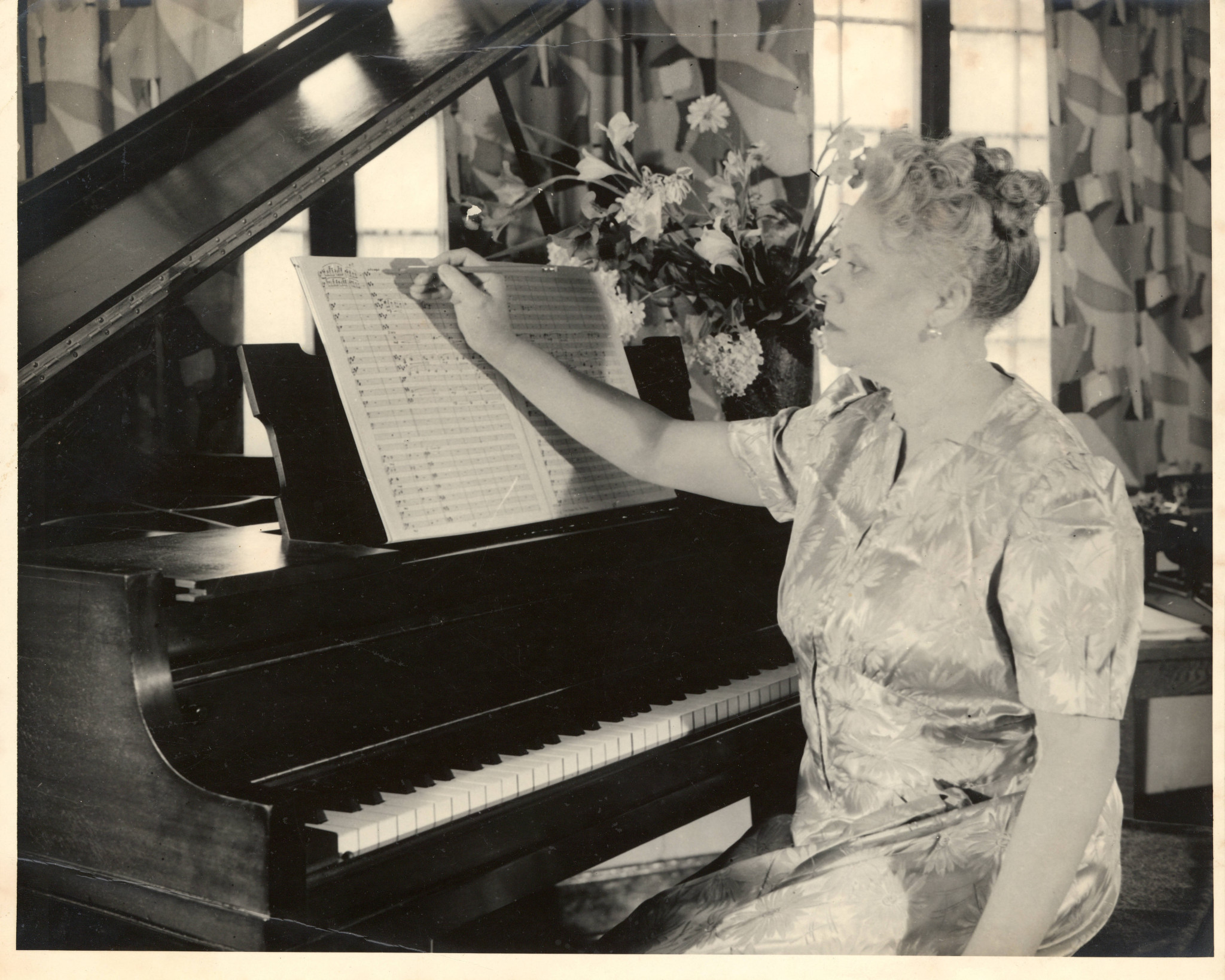
© Florence Price at the piano, 1941 – © Adams Foto / University of Arkansas
Going back to the cover portrait of Florence Price and my research into its creator, those same search terms also threw up – to my surprise – references to a baritone of the same name who had regularly performed in Chicago. On page 11 of the 4 January 1936 issue of Billboard magazine, under the heading “Night Club Reviews”, there was a report on an event held in the Walnut Room of Chicago’s Bismarck Hotel. George Nelidoff, apparently the producer of the show, had given a tight half-hour-long performance, with a company of other artists, of Bizet’s Carmen, cut down to its key numbers. He himself sang Escamillo’s “Votre toast, je peux vous le rendre”.
[“… Nelidoff fervently sang the stirring Toreador Song in his powerful baritone voice … If Nelidoff can continue to reduce other operas as cleverly as he has done with this one there is no reason why he should not duplicate his previous run of six months.”]
The time had come to connect the dots. As mentioned above, the CSO’s archives house a number of photos taken by George Nelidoff, so I contacted them via their website to ask whether the orchestra knew anything about him, and whether the singer and the photographer might actually be one and the same person.
A few days later I received a reply from Frank Villella, Director of the Rosenthal Archives of the Chicago Symphony Orchestra Association. His detailed email included significant information and documents that he had kindly obtained from archivist colleagues at other Chicago institutions. These documents proved that George Nelidoff was both a photographer and a singer. I looked again at the picture I’d found on the historic photo dealer’s page, this time paying particular attention to his costume and headgear. And then it clicked! The traditional bullfighter’s jacket (traje de luces) and cap (montera), together with the “George Nelidoff” and studio name and address stamps could only mean one thing: the photo was highly likely to be a self-portrait of Nelidoff, dressed as Escamillo, taken in his Chicago studio in around 1936. A few more (mouse) clicks later, and the original photo – the most important piece in this puzzle – was bought and on its way to me.
I now plan to write an article incorporating all the information uncovered in researching this Cover Story, including the documentary evidence supplied by the CSO, in order to pay tribute to George Nelidoff and the role he played in the history of both photography and music. For the time being, here is a brief outline of his life: he was born in St Petersburg in 1894 and probably studied at the city’s conservatory; after the Russian Revolution he was the victim of political persecution and, in 1926, he and his wife Eugenia travelled to New York, via Berlin; their daughter Eugenia-Georgia was born in Chicago in 1930 and there is evidence of Nelidoff’s work as a photographer from 1935 onwards; he died in a car accident in Texas in 1969.
In summary, the rediscovery of Florence Price is hugely significant in terms of the history of music. The fact that research into her life and work is also suggesting other lines of enquiry just goes to show how important it is to give marginalised groups the visibility they deserve if we want to establish a truly rounded picture of our society. As for the photographer-singer, he will in future be credited in full as “George Nelidoff” both on the University of Arkansas website and in the DG album booklet.